

Matcha Whisk vs Milk Frother: Which Should You Use?
A bamboo matcha whisk and a handheld milk frother can both mix matcha, but they do not create exactly the same experience. One is shaped for controlled whisking in an open bowl. The other uses a small motorized coil to mix quickly in a cup or measuring jug.
The practical choice depends on what you make, how much time you have, and which texture you enjoy. This guide compares the two tools without treating either one as universally better.

The short answer
- Choose a bamboo whisk if you enjoy traditional bowl preparation, want close control over the texture, and do not mind rinsing and air-drying a natural tool.
- Choose a handheld frother if speed, compact storage, and mixing directly in a mug or small jug matter most, especially for everyday lattes.
- Use both if you like a bamboo whisk for matcha and a frother for milk. Each tool can have a separate role.
Whichever tool you use, start with sifted powder and a small amount of warm water. Good preparation before mixing usually matters more than trying to fix dry clumps after a full cup of liquid has been added.
What a bamboo matcha whisk does
A bamboo whisk, or chasen, is formed with many flexible tines. In a wide bowl, those tines move the matcha and water back and forth across a broad area. The goal is not to stir in a slow circle. A quick, light wrist motion disperses the powder and introduces fine bubbles at the surface.
The shape suits traditional matcha served with water. It also works for making a concentrated matcha base before adding milk. Because the whisk is moved by hand, you can adjust the speed and stop as soon as the mixture looks even.
Where a bamboo whisk works best
- traditional matcha in an open bowl;
- small servings prepared with water;
- drinkers who value the preparation ritual;
- people who want direct control over whisking speed and surface foam.
What to keep in mind
A chasen needs enough room to move. A narrow mug can restrict the tines and make it easier to strike the sides. Before use, briefly soften the whisking end in warm water. After use, rinse it promptly with clean water and let it dry completely in open air. Avoid dishwashers, hard scrubbing, and sealed storage while damp.
For a traditional setup, the Umacha Co. bamboo matcha whisk is designed for bowl preparation. The Shin handmade bamboo matcha whisk is another current option. Review the product pages for their current specifications and care guidance before choosing.
What a handheld milk frother does
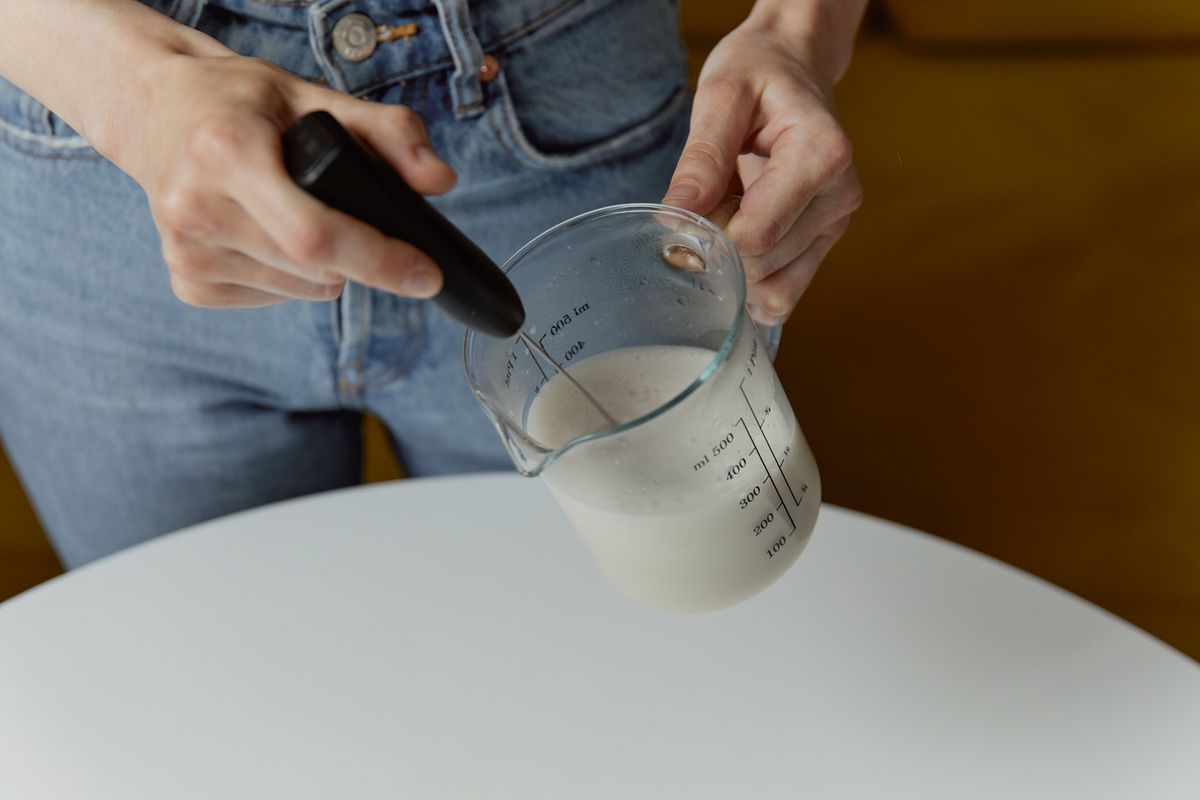
A handheld frother spins a small metal coil at high speed. It is compact and fast, and it can mix matcha in a mug, tall cup, or measuring jug. It can also aerate milk, which makes it useful when matcha lattes are your main drink.
For matcha, start with the frother head fully below the liquid before switching it on. Keep the cup steady and use a lower-sided volume at first. If the coil begins near the surface, the drink can splash and form large bubbles before the powder is evenly dispersed.
Where a handheld frother works best
- quick matcha lattes at home or at work;
- mixing in a mug or deeper cup;
- small kitchens with limited storage;
- people who prefer a motorized tool and short preparation time.
What to keep in mind
A frother can move liquid aggressively. Use a vessel with enough headroom, and begin with the coil submerged. Rinse the coil immediately after use, but keep the handle, motor, and battery compartment dry unless the maker explicitly states otherwise. Follow the specific device instructions for cleaning and charging or battery replacement.
Matcha whisk vs milk frother: the practical differences
Texture and foam
A bamboo whisk spreads movement across many tines and gives you manual control over the surface. With good technique, it can create an even layer of fine bubbles in matcha prepared with water. A handheld frother concentrates its motion around a small spinning coil. It can produce foam quickly, but the bubbles may be larger and the liquid may form a deeper vortex.
Neither appearance is automatically a sign of better matcha. The useful question is whether the powder is evenly dispersed and whether you like the texture in your usual drink.
Speed and convenience
A frother is usually faster to start: place it in the liquid, switch it on, mix, and rinse the coil. A bamboo whisk adds a few small steps, including softening the tines, using a suitable bowl, and drying the whisk openly. For some people, those steps are part of the appeal rather than an inconvenience.
Vessel choice
A chasen performs best in a stable bowl that is wide enough for back-and-forth movement. A frother is easier to use in a deeper cup or jug that contains splashes. If you already own a favorite mug but no open bowl, the frother may fit your setup more naturally.
Cleanup and durability
Bamboo needs gentle handling and complete air-drying. The tines gradually change with use and should be inspected for loose or sharply broken pieces. A frother has a washable coil but also includes a motor and electrical components that should not be immersed. Its useful life depends on build quality, use, and care.
Noise and feel
A bamboo whisk is quiet and tactile. A frother makes a small motor sound and can vibrate in the cup. This difference is minor, but it may matter if your morning routine is intentionally calm or if you prepare drinks around sleeping family members.
How to get smoother matcha with either tool
- Use a dry measure. Moisture in the package can encourage the powder to clump.
- Sift before adding water. Pass the matcha through a clean, dry fine mesh.
- Begin with a small amount of warm water. Make a smooth matcha base before adding the rest of the water or milk.
- Use the right vessel. Choose a wide bowl for a chasen and a deeper cup or jug for a frother.
- Mix briefly and check. Stop when the powder is dispersed instead of continuing simply to create more foam.
- Clean immediately. Fresh residue rinses away more easily than dried matcha.
A fine-mesh matcha sifter is helpful with either method because it breaks apart soft clumps before they meet water. Sifting does not replace mixing, but it gives both tools a more even starting point.
Which tool should you choose?
Choose the bamboo whisk if your priority is traditional preparation, a quiet hands-on process, and close control in a bowl. Choose the frother if your priority is speed, a compact tool, and convenient latte preparation in a mug or jug.
If you are still unsure, think about the drink you make most often. Someone who drinks matcha with water may use a chasen every day. Someone who mainly drinks iced lattes at work may reach for a frother more consistently. A tool is useful when it fits the routine you will actually maintain.

Tools for your matcha routine
If you want to begin with a coordinated bowl-and-whisk setup, the Matcha Starter Kit for Beginners combines core preparation tools with a matcha option. Check the current contents and available choices on the product page. If you already own a suitable bowl, adding only a whisk and sifter may be the simpler approach.
A handheld frother is widely available from kitchen retailers, so choose one based on the maker's instructions, cleaning design, power source, and the depth of the vessel you use. The article does not require a particular frother model.
Frequently asked questions
Can a milk frother fully replace a bamboo matcha whisk?
It can mix matcha for many everyday drinks, especially lattes, but it does not reproduce the same manual process or exact surface texture as a chasen in a bowl. Whether it is a complete replacement depends on the drink and experience you want.
Is a matcha whisk better for traditional matcha?
A bamboo whisk is specifically shaped for preparing matcha in a bowl and is the more traditional choice. It provides broad, controlled movement through a small serving of matcha and water.
Can I froth matcha directly in milk?
You can, but matcha often disperses more evenly when first mixed with a small amount of warm water. Add milk after the base is smooth. This also makes it easier to see and address dry clumps.
Why does my handheld frother splash?
The coil may be too close to the surface, the vessel may be too shallow, or there may be too much liquid. Begin with the head submerged in a deeper cup and switch it on only after it is in position.
Do I need to sift matcha if I use a frother?
Sifting is still useful. A fast motor can break up some clumps, but starting with evenly sifted powder reduces the work required and helps the matcha hydrate more consistently.
The takeaway
A bamboo whisk favors control, tradition, and bowl preparation. A handheld frother favors speed, compact storage, and easy latte routines. Both can make enjoyable matcha when the powder is sifted, the vessel suits the tool, and the mixing method stays controlled. Choose for your real habits, not for an abstract idea of the perfect setup.