

How to Choose a Matcha Bowl: Shape, Size, and Pouring
A good matcha bowl gives your whisk room to move, feels stable on the counter, and suits the way you actually drink matcha. It does not need to be ornate or expensive. The most useful choice is a bowl whose width, depth, rim, and weight make preparation comfortable.
This guide explains what to look for without treating one shape as universally best. A bowl for traditional matcha may prioritize open whisking space, while a bowl used mainly to build lattes may benefit from easy pouring.
What is a matcha bowl?
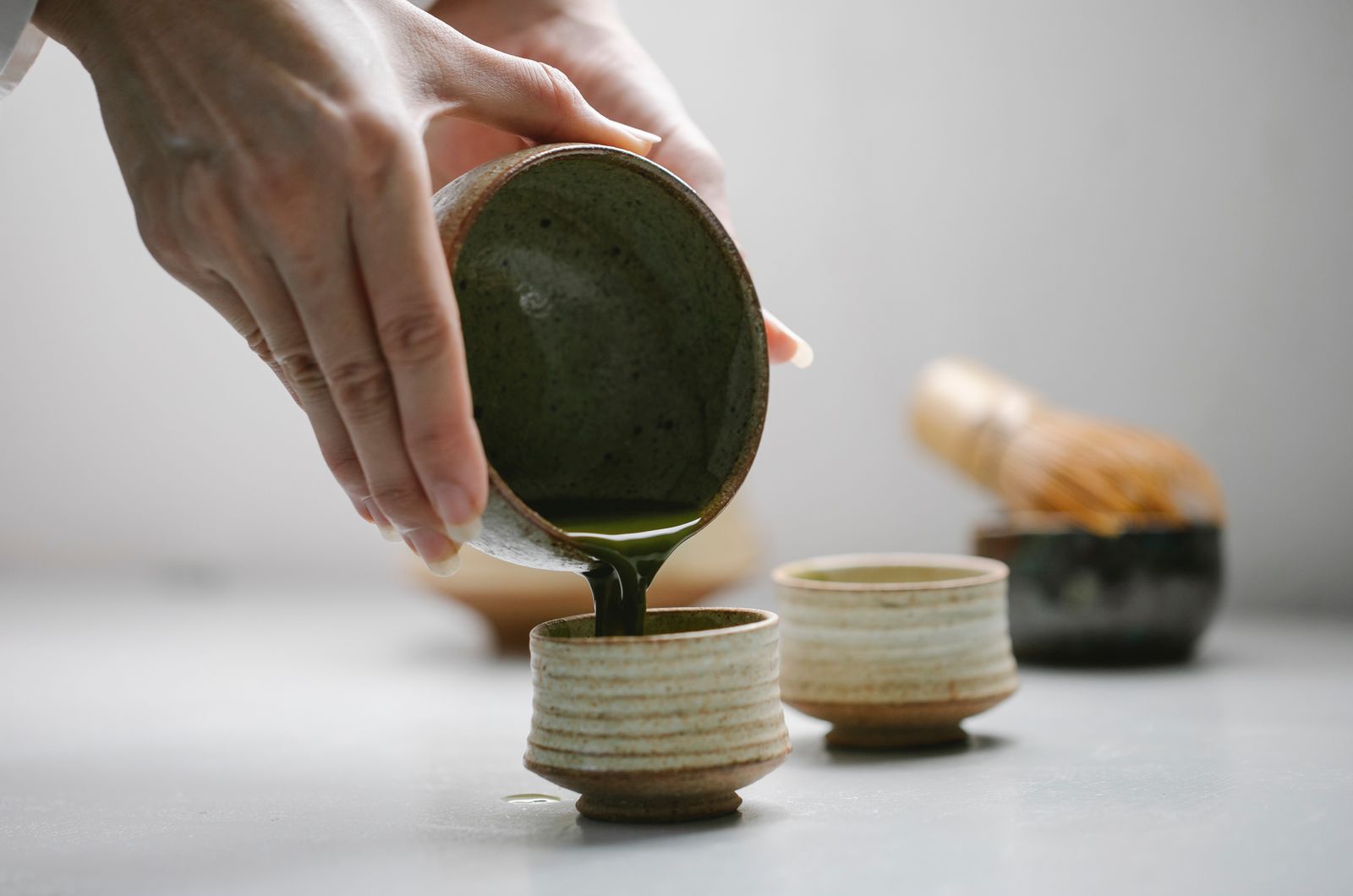
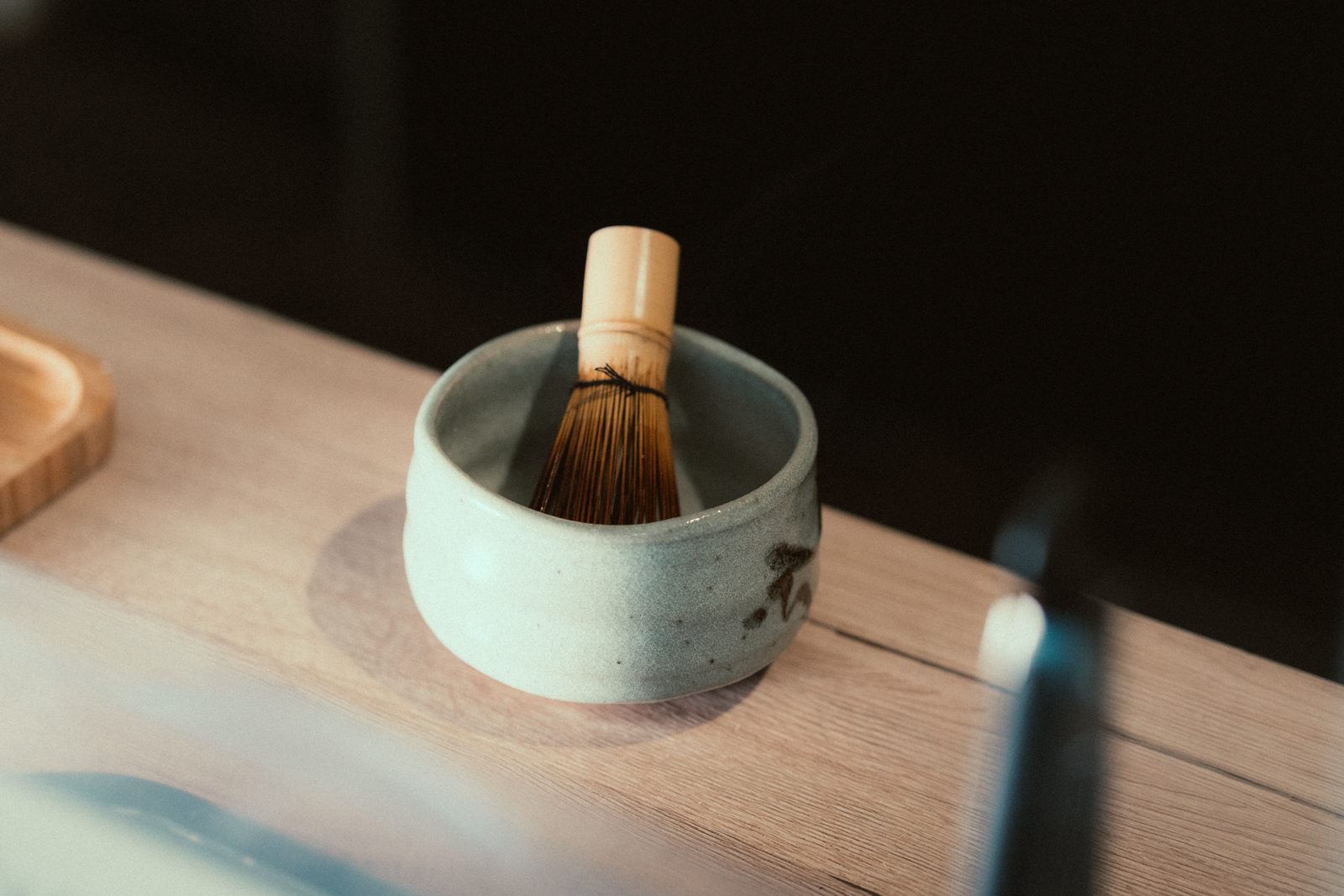
A matcha bowl, often called a chawan, is an open vessel used to combine matcha powder and water with a bamboo whisk. Its broad working area distinguishes it from many everyday mugs. Traditional bowls vary widely in form, finish, and visual character, so there is no single required silhouette for home preparation.
Function comes first for a daily bowl. You should be able to add sifted powder, pour water, move the whisk quickly without striking the sides, and lift or pour from the bowl with confidence.
Start with enough room to whisk
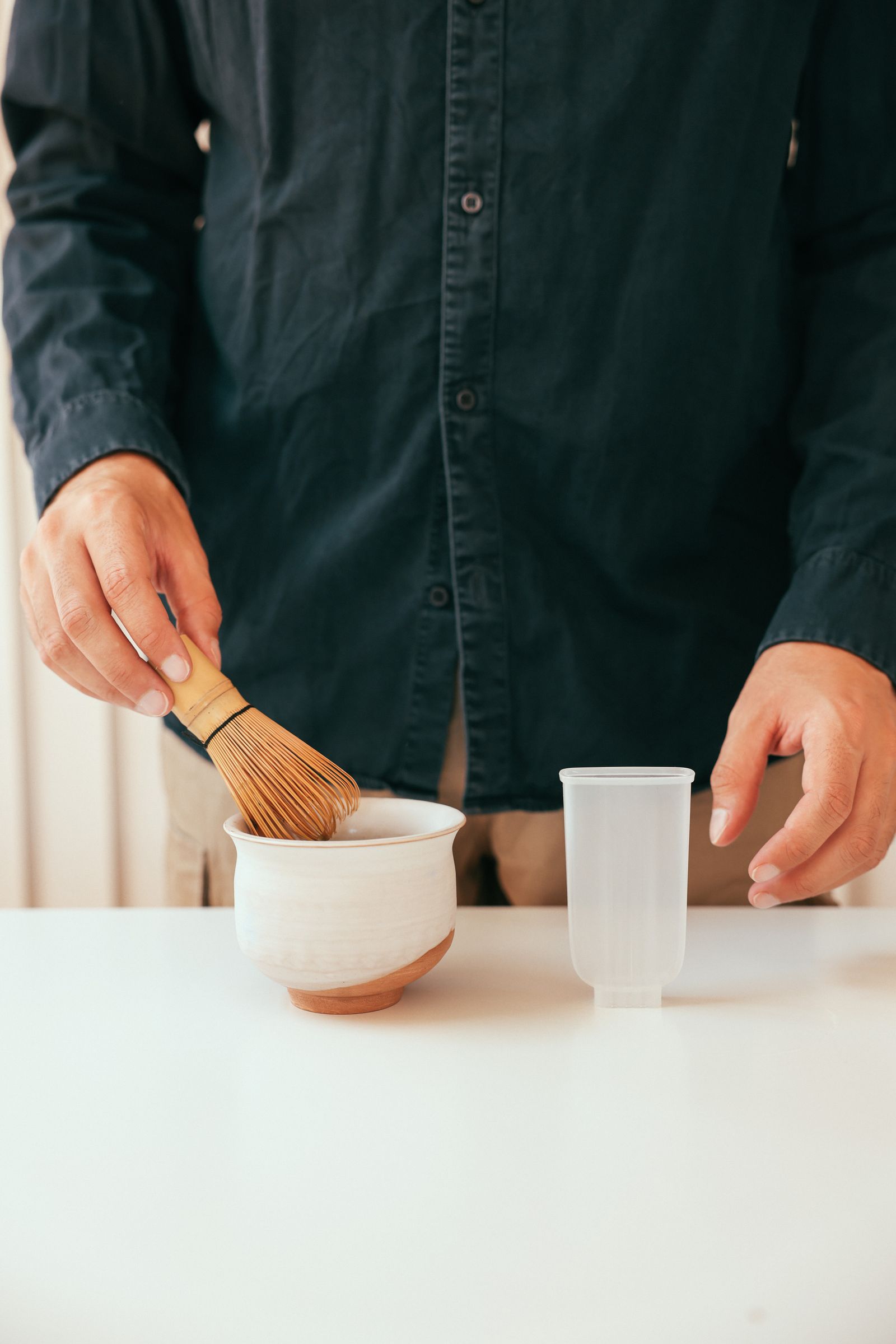
The opening should be wide enough for a chasen to move back and forth from the wrist. If the bowl is very narrow, the outer tines can repeatedly touch the walls. This restricts movement and makes a light whisking rhythm harder to maintain.
A very large bowl is not automatically better. Too much empty space can feel awkward for a small serving and may allow the liquid to spread into a very shallow layer. Look for a proportion that gives the whisk freedom without making the portion feel lost.
Try the hand-and-whisk test
If you are shopping in person, hold the bowl steady with one hand and imagine the whisk moving quickly in the center. Your knuckles should not feel crowded by the rim. If you are shopping online, compare the listed measurements with a bowl you already own and test that reference at home.
Choose a depth that controls splashes
A shallow bowl gives a clear view of the surface and can feel elegant for serving matcha with water. It also leaves less room for enthusiastic whisking. A deeper bowl provides more splash protection, but a very deep, narrow profile can reduce side-to-side movement.
For many home routines, a moderately deep bowl with an open top is the most forgiving balance. Whisk with small, quick movements rather than forcing the tool across the full diameter.
Look closely at the interior shape
A smooth interior with gently curved sides is easy to navigate with a bamboo whisk. Abrupt corners can trap dry powder, while a sharply uneven surface may make it harder to move the whisk lightly. Handmade character is not a problem, but check whether the working area feels practical.
The base inside the bowl should be broad enough for the whisk to move without being pressed into a tight point. You are whisking through the liquid, not grinding the tines against the ceramic.
Check stability, weight, and grip
A stable foot or broad base helps the bowl stay planted while you whisk. Very lightweight vessels can slide unless they are held firmly. Heavier bowls often feel secure, although they may be less convenient for someone with limited grip strength or for a setup that is moved frequently.
Notice how the bowl feels when lifted with both dry and slightly damp hands. Textured exterior surfaces may offer grip, while highly polished surfaces can feel more slippery. Choose for comfort rather than appearance alone.
Decide whether you need a pouring spout
A spout is optional for matcha served directly from the bowl. It becomes more useful when you regularly whisk a concentrated matcha base and transfer it into a separate glass or mug for a latte.
The spout should guide a controlled stream without making the bowl uncomfortable to hold. A bowl without a spout can still pour well if the rim is clean and the vessel is easy to tilt, but small drips are more likely.
Consider the rim and serving style
If you drink directly from the bowl, the rim affects the final experience. A smooth, comfortable edge is easier to sip from than a rim with rough decoration or a shape that feels awkward against the lip. Inspect product photos closely and read the care information for the finish.
If the bowl is only a preparation vessel, prioritize whisking space and pouring control. Your final drink can be served in a separate cup, mug, or glass.
Material and finish: practical differences
Ceramic
Ceramic is common because it offers useful weight, many shapes, and a surface that is comfortable for preparation. Handle it carefully, avoid sudden impacts, and follow the maker's guidance on hand washing, dishwashers, and temperature changes.
Glass
Glass makes the color and mixing process easy to see. The exact heat tolerance depends on the product, so do not assume every glass bowl is suitable for hot water. Check the manufacturer's instructions and avoid rapid temperature changes unless the item is designed for them.
Other materials
Metal, stoneware, and food-safe composite bowls can also work. The same functional questions apply: Is the opening wide enough? Is the base stable? Is the interior comfortable for the whisk? Is the material approved for the temperature and cleaning method you plan to use?
A practical checklist before buying
- Picture your usual drink. Traditional matcha, hot latte, and iced latte routines place different demands on the bowl.
- Check the opening. Make sure your whisk can move freely without repeated contact with the sides.
- Review the depth. Look for enough headroom to contain splashes without creating a narrow tunnel.
- Inspect the inside. Prefer a usable central area and gently curved sides over tight corners.
- Consider the base. A stable foot and comfortable weight make quick whisking easier to control.
- Decide on a spout. Choose one if you often transfer a matcha base into another vessel.
- Read the care instructions. Confirm cleaning and heat guidance for the exact material and finish.
Tools for your matcha bowl routine
The Ceramic Matcha Bowl and Whisk Holder Set is a current spouted option for people who regularly transfer whisked matcha into a latte glass. If you are starting without any tools, the Matcha Starter Kit for Beginners pairs a bowl with a whisk, holder, spoon, and sifter; review the current contents and variations on the product page.
If you already have a suitable bowl, a bamboo matcha whisk should have enough room to move without striking the sides. A fine-mesh matcha sifter can sit over the bowl before water is added, so confirm that the sifter and rim work comfortably together.
Frequently asked questions
Can I use a regular cereal bowl for matcha?
Yes, if it is stable, wide enough for the whisk, and safe for the water temperature you use. A dedicated matcha bowl is helpful, but the functional shape matters more than the label.
Is a wider matcha bowl always better?
No. You need enough lateral space for whisking, but an oversized bowl can feel awkward for a small serving. Aim for a balanced proportion that suits your hand, whisk, and usual volume.
Do I need a matcha bowl with a spout?
Not for matcha served directly from the bowl. A spout is useful when you often pour a concentrated matcha base into a separate latte glass or mug.
Why does my whisk hit the bowl?
The bowl may be too narrow, the motion may be too wide, or the whisk may be pressed downward. Use a light wrist movement and keep the tines moving through the liquid rather than scraping the ceramic.
Should a matcha bowl be dishwasher safe?
That depends on the exact material, glaze, and maker's instructions. Hand washing is the cautious default when guidance is unclear, especially for decorated or handmade ceramics.
The takeaway
Choose a matcha bowl by function: open whisking space, manageable depth, a stable base, a comfortable interior, and a rim or spout that suits your serving style. When those details fit your routine, the bowl becomes a quiet support for better preparation instead of a decorative obstacle.